CIM401 Assessment
This is Quick Response Experimental Ideation's procss.
Chia-yu Chang - Graduate Studio 2

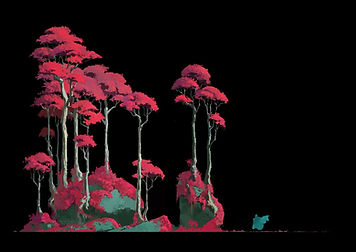
This assessment requires me to create a 3D model, and the image on the left is the object that I will turn into a 3D model.
Purpose: Learning
This is works list
- Gem pool (done)
- crystal chandelier (done)
- tree (done)
- Energy Ball
- Hydrangea
Special eeffects
- water
- firefly
- light

This is a quick & simple 's trees testing modle.


Chandelier
1. Inspiration Image
I began with the first image as my inspiration. This picture showed the original design idea and helped me decide the overall style of the chandelier I wanted to create.
2. Shape Exploration
Next, I created four different shapes to test which form would work best for the chandelier. This step helped me compare the designs and choose the shape that matched my concept.
3. Final Outcome
After choosing the best shape, I refined the design and built the final chandelier. The last part includes the final rendered image and a short video showing how the chandelier looks in 3D.


Tree Making Process
1. Trunk and Roots
I began by modelling the tree trunk and roots. The texture painting part was quite easy (shown in the video below). However, the main difficulty was deciding the style of the tree—what it should actually look like.
My original drawing showed a very thin tree, but when I built it in 3D, it didn’t look good. Because of this, I researched more images.
The inspiration image on the left helped me redesign the shape.
2. Sculpting the Texture
To create a more natural tree surface, I used Blender’s sculpting tools.
As you can see in the final part of the video, sculpting added detail and made the model look much more like a real tree.
Tree down Color detil:
1. #4B1C00FF (dark)
2. #733607 (Mind)
3. #C68136 (light)

All Videos
Leaves
The leaves were easy to create, but they took a lot of time. I followed a tutorial video, but the method required using Adobe Substance Painter, which I had to learn from scratch. Understanding the software itself took extra time.
Another challenge was that the tutorial video was very fast and didn’t show each step clearly. Because of this, I had to figure out many parts on my own.
Even though it was slow, I eventually worked out the process and completed the leaves.
Hydrangea
The hydrangea was created using the same technique as the leaves, so this part was very easy and quick to complete.
Because the method was already familiar, I could make the hydrangea smoothly. The final result is simple, but it fits well with the overall style of the project.

Gem
The gem was very easy to create. I simply followed the tutorial video, and the steps were straightforward. Once I understood the method, the gem was quick to finish.
Pool
The pool was more challenging because its shape is unique, so I had to think carefully about how to build it. I experimented with different approaches to see if there was a faster method.
During this testing process, something unexpected happened—a mistake that actually gave me a new idea. That accident became the inspiration. (that is add tree)

Water effect Making Process
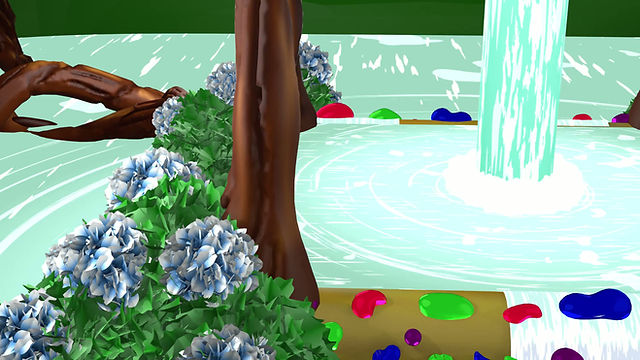
The water effect turned out to be the most challenging part of my entire project. At first, I experimented with Blender’s Fluid and Liquid simulations, but the system was difficult to control and did not produce the outcome I wanted. Because of this, I decided to use a different technique.
Creating the water ripples required the most effort. Although the tutorial I followed explained the steps clearly, the process involved many small actions, and I often found myself repeating the same steps multiple times. Another layer of difficulty came from the shape of my pool, which was different from the example shown in the video. Even after understanding the tutorial, I still needed additional time to adjust the method for my own design.
Despite the challenges, this part of the project taught me a valuable new skill. I also discovered that the same technique could be applied creatively—for example, I used it again when adding colour to my hydrangea. The difficulty of the process ended up helping me expand my toolkit as a 3D artist.

Summarize:
This project focused on creating a 3D “gem pool” environment that included a chandelier, trees, leaves, hydrangeas, water effects, and a final rendered scene. Each component required its own techniques and problem-solving process.
I began with the chandelier, using reference images to shape the design. I tested different forms before finalising a structure that fit the atmosphere of the scene.
For the tree, I modelled the trunk and roots first. The challenge was choosing the right tree style. My original thin design did not look good in 3D, so I researched new reference images and used Blender’s sculpting tools to create a more natural, textured appearance.
The leaves and hydrangeas followed a similar workflow. Although the method was simple, it took time because I needed to learn Substance Painter. The tutorial was fast and unclear, so I had to work out many steps on my own. The hydrangeas were easy to make but ended up looking very simple.
The gem was quick to build by following a tutorial, while the pool required more creative thinking due to its unique shape. I experimented with different modelling approaches, and an unexpected mistake even inspired part of the tree design.
The water effect was the most difficult component. Blender’s fluid simulation was hard to control, so I switched to a manual ripple-creation technique. The tutorial had many steps, and I had to adapt them because my pool shape was different. Despite the challenge, I learned a valuable new skill that I also used for colouring the hydrangeas.
What Was Successful
-
Water effect – achieved the visual style I wanted
-
Tree – strong sculpting detail and appealing form
-
Chandelier – effective design and modelling
These parts turned out very well, and I feel proud of them.
What Was Less Successful
-
Lighting – the scene lighting did not show the effect I wanted
-
Hydrangeas – the flowers appear too simple, and some people may not recognise them as hydrangeas
Unfinished Elements
Some planned features were not completed due to limited time:
-
Cute creatures
-
Firefly effect
Because of the time pressure, I had to change my plan and leave these out.
Time Management Reflection
My time management for this project was not as strong as it needed to be. Some parts took longer than expected, especially the water effect and learning new software. This experience showed me that I need to plan more carefully and leave extra time for testing and problem-solving.
